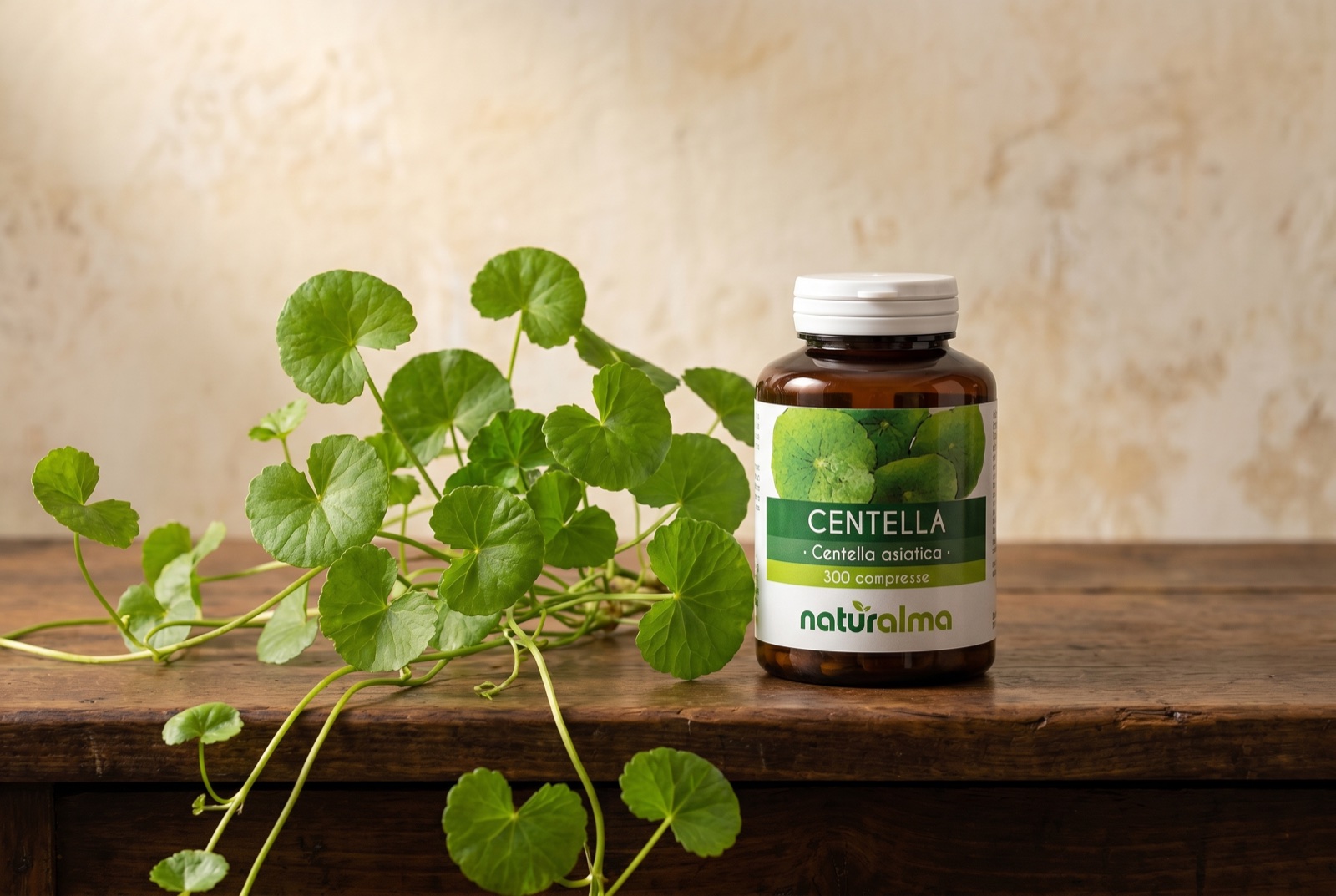
Gotu Kola (Centella asiatica) is traditionally associated with the wellbeing of microcirculation and legs, including a feeling of lightness, and with supporting connective tissue and skin tone. These are traditional associations, not medical or aesthetic guarantees — it is a food supplement, not a slimming or anti-cellulite product.
Of all the reasons people reach for Gotu Kola, the legs are the most famous. In the herbal tradition, Centella asiatica has long been the plant linked to a sense of light, comfortable legs. This article explains that reputation honestly: what the tradition associates the plant with, and — just as importantly — what it does not claim.
Is Gotu Kola good for legs and circulation?
In the herbal tradition, Centella asiatica is traditionally associated with the wellbeing of microcirculation and legs, including a feeling of lightness. This is a traditional association, not a medical claim; it remains a food supplement within a balanced lifestyle.
The connection between centella and the legs is one of the oldest in Asian herbalism. Its characteristic triterpenes — asiaticoside and madecassoside — are the compounds the tradition links to this reputation. Many people who experience the end-of-day sensation of heavy legs turn to centella for that reason, used as part of a routine that also includes movement, hydration and rest.
Heavy legs and the feeling of lightness
"Heavy legs" is a familiar everyday sensation rather than a diagnosis, and it is exactly the territory the herbal tradition associates with centella. The plant is traditionally linked to the wellbeing of microcirculation and to that sought-after feeling of lightness. It is best thought of as a supportive habit, not a remedy.
| Theme | Traditional association |
|---|---|
| Microcirculation | Wellbeing of microcirculation |
| Legs | Feeling of light, comfortable legs |
| Connective tissue | Support for connective tissue |
| Skin | Skin tone and suppleness |
| Not | Not a slimming, anti-cellulite or medical product |
Does Gotu Kola help with cellulite?
Centella asiatica is not a slimming or anti-cellulite product and offers no guaranteed aesthetic result. Traditionally it is associated with the wellbeing of microcirculation, legs and skin tone. Any approach to skin appearance should rely mainly on a balanced lifestyle.
This is where prudence matters most. You will see centella mentioned in conversations about cellulite, but it is honest to be clear: it is not an anti-cellulite treatment and will not guarantee any cosmetic outcome. What the tradition does associate it with is the wellbeing of microcirculation, legs and skin tone — and those are general wellbeing themes, not aesthetic promises. For visible skin appearance, the foundations remain a balanced diet, movement, hydration and good habits.
Is Gotu Kola good for the skin?
The herbal tradition has long associated Centella asiatica with skin tone and suppleness, thanks to its triterpenes. This is a traditional association rather than a medical claim, and it works best as part of an overall healthy routine.
The connective-tissue and skin-tone associations are closely related: the same triterpenes underpin centella's traditional reputation in both areas. Treat it as one supportive element among many.
- Microcirculation & legs: the headline traditional association.
- Connective tissue: traditionally linked to its support.
- Skin tone: a long-standing tradition, not a cosmetic guarantee.
- Lifestyle first: centella complements healthy habits, it does not replace them.
New to the plant? Start with what Gotu Kola is and its benefits, and check the side effects and contraindications before you begin.
For light legs, the natural way
Gotu Kola (Centella asiatica) by Naturalma — 300 tablets, 2 a day, Made in Italy. Discover the product and your −15% code.
Discover the product · −15% code →